Managing your VPS order
Key features and actions for your virtual server in the Fornex dashboard.
Server management
This area contains the core actions for your order:
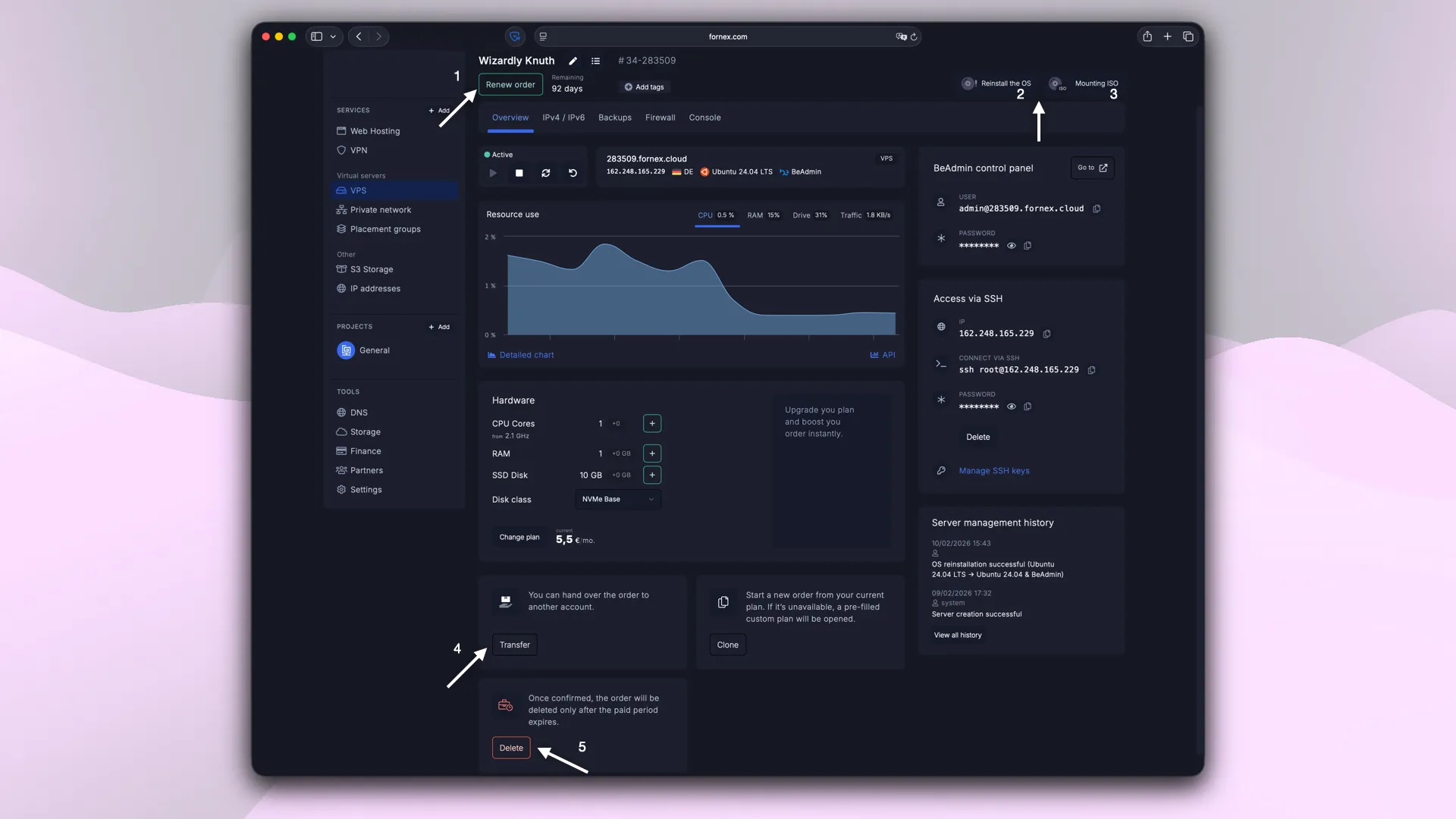 Main server actions
- Renew order — extend your subscription for any period. Select the duration and click “Pay”.
- Reinstall the OS — perform a full system reinstall. Choose from all supported operating systems and ready-made application templates.
Warning
Reinstalling wipes all data on the server permanently — no recovery possible. Back up everything first.
- Mounting ISO — attach ISO images (from the list or upload your own). Full guide on mounting ISOs here.
- Transfer — move the VPS to another Fornex account. Step-by-step instructions here.
- Delete — disable auto-renewal. Any unused balance remains on your account and isn’t charged automatically. To fully terminate and request a refund for remaining days, open a support ticket.
Resource monitoring
Displays current CPU, RAM, disk, and traffic usage (updates every 15 minutes).
Click “Detailed chart” for in-depth statistics across all resources.
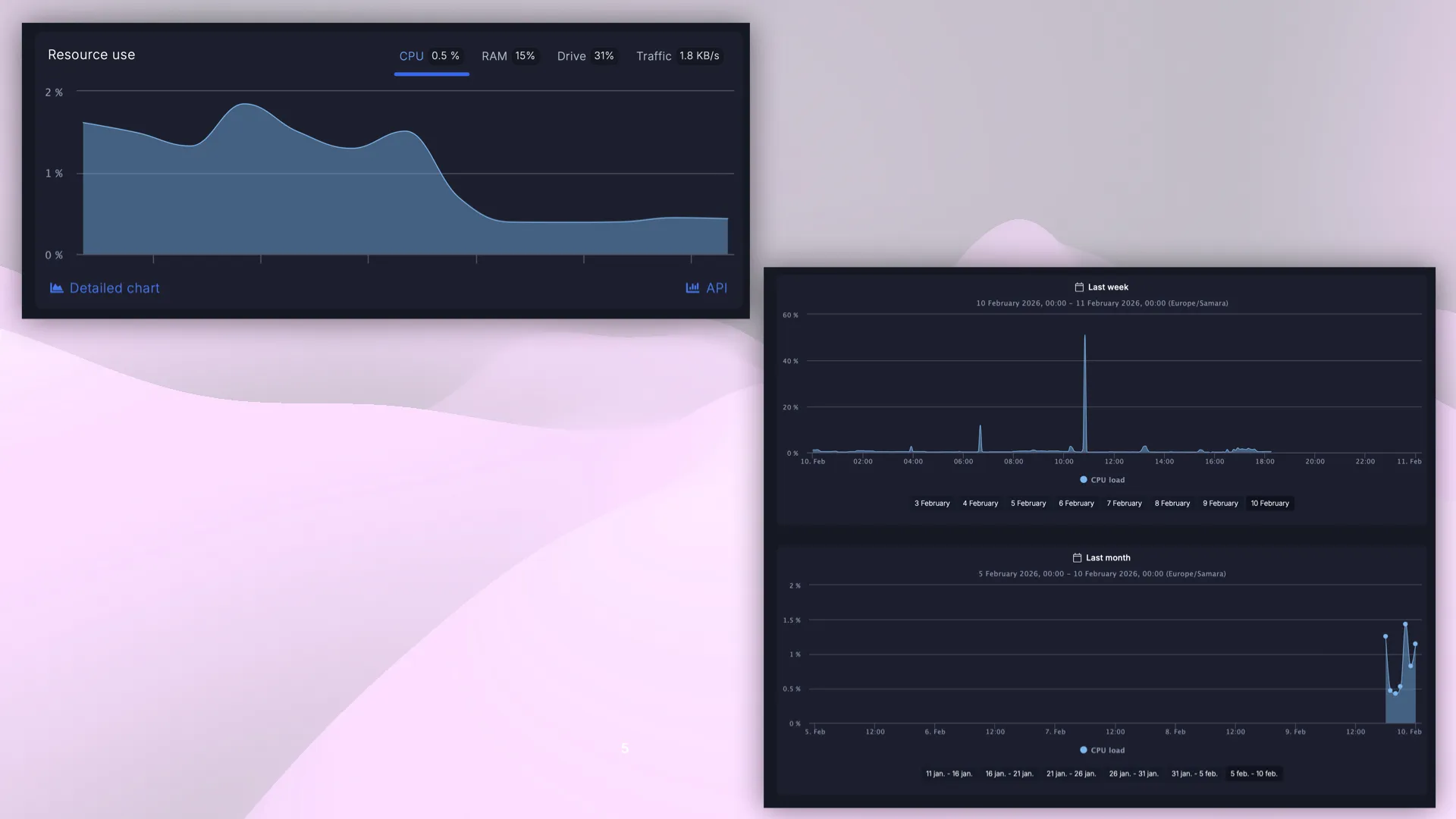 Resource consumption charts
SSH access
- Change or remove the root password.
- Add SSH keys for passwordless login.
How to generate and add keys — guide here.
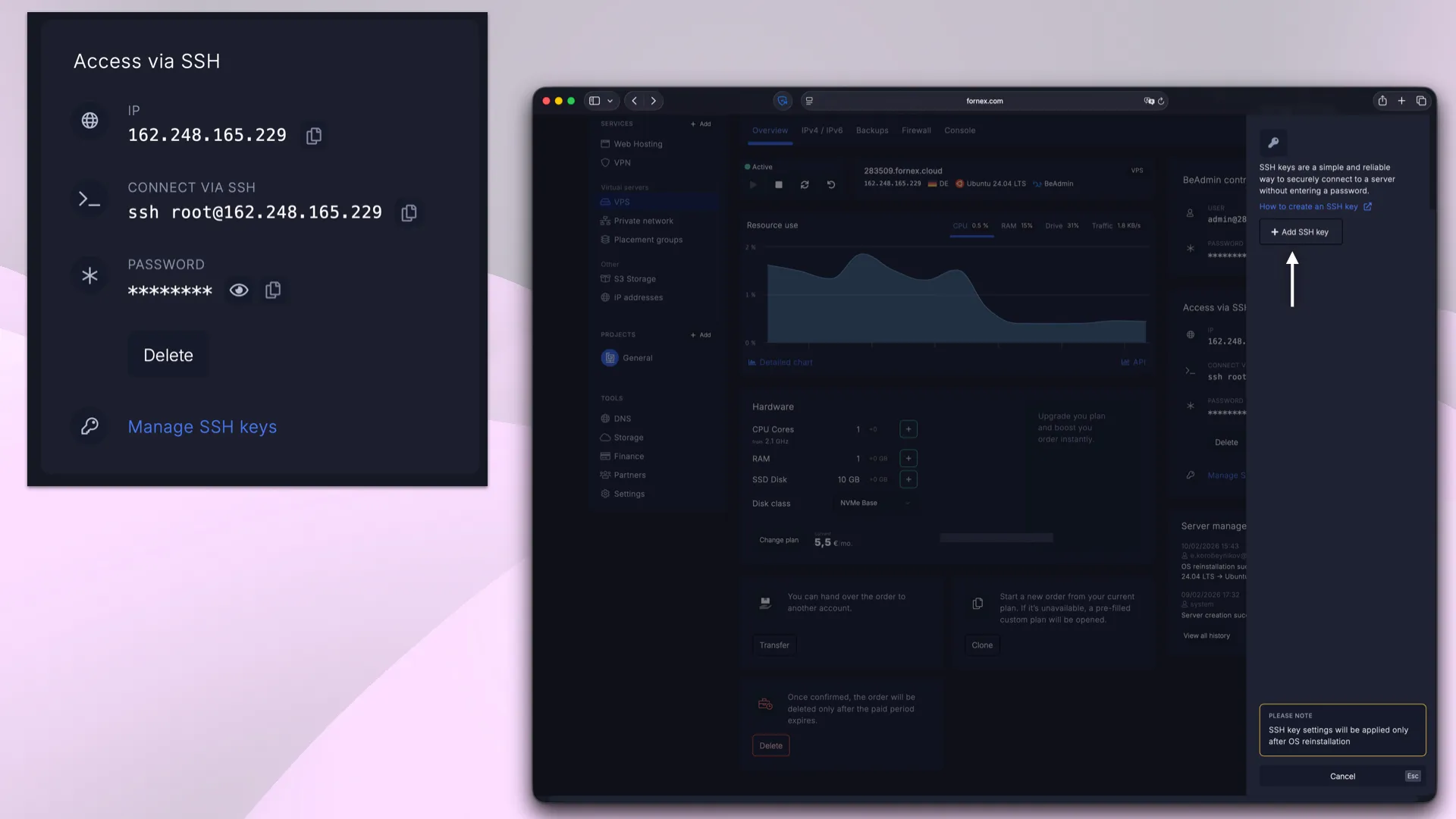 Managing SSH access
Control panels
Supported control panels:
Legacy panels (for existing setups):
To switch panels, reinstall the OS and select the desired one during the process.
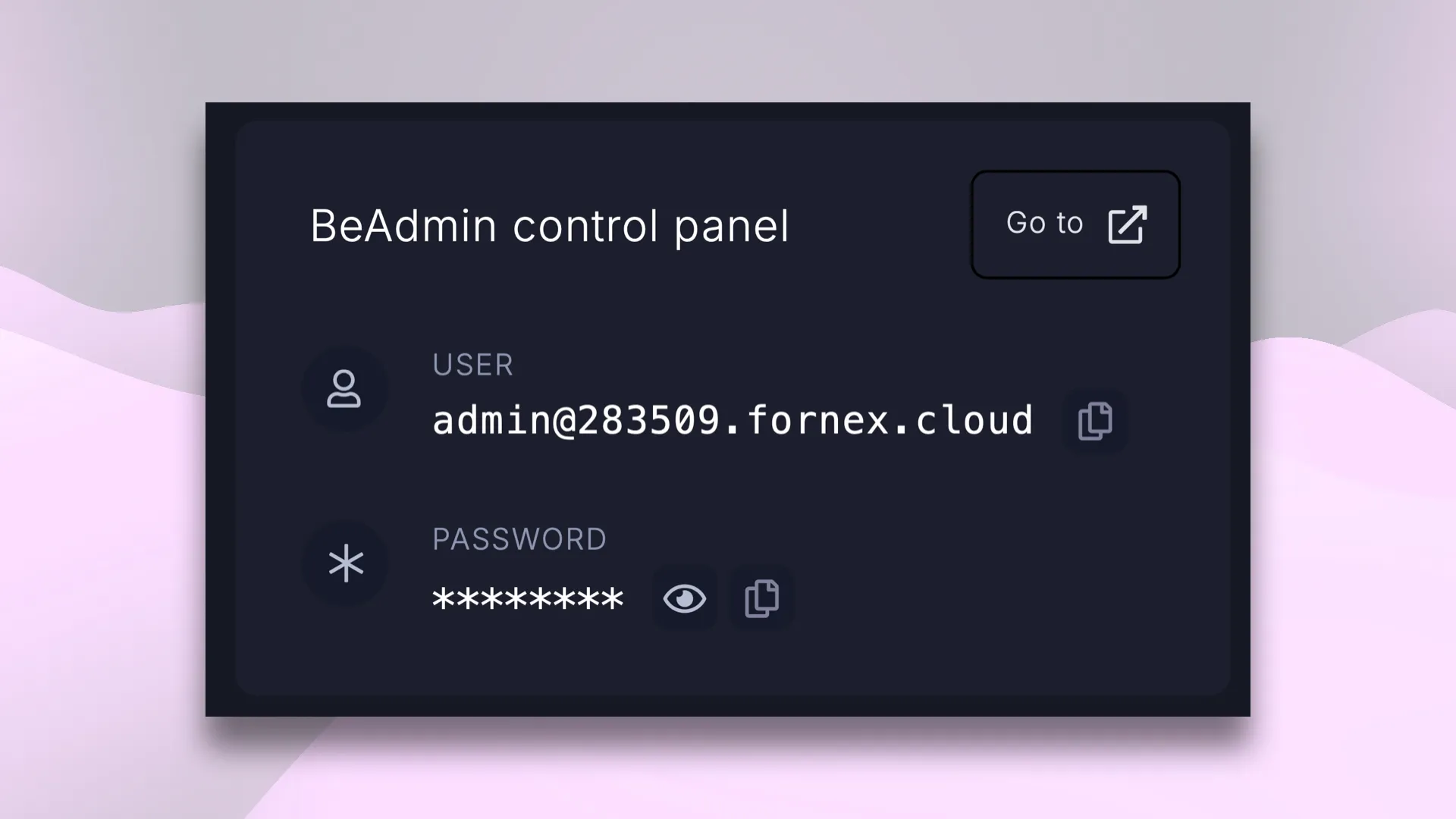 Control panel installed on VPS
IPv4 / IPv6
- View all assigned IP addresses.
- Add PTR records (reverse DNS). More about PTR here.
- Add VPS to a private (local) network.
Learn more about private networks here.
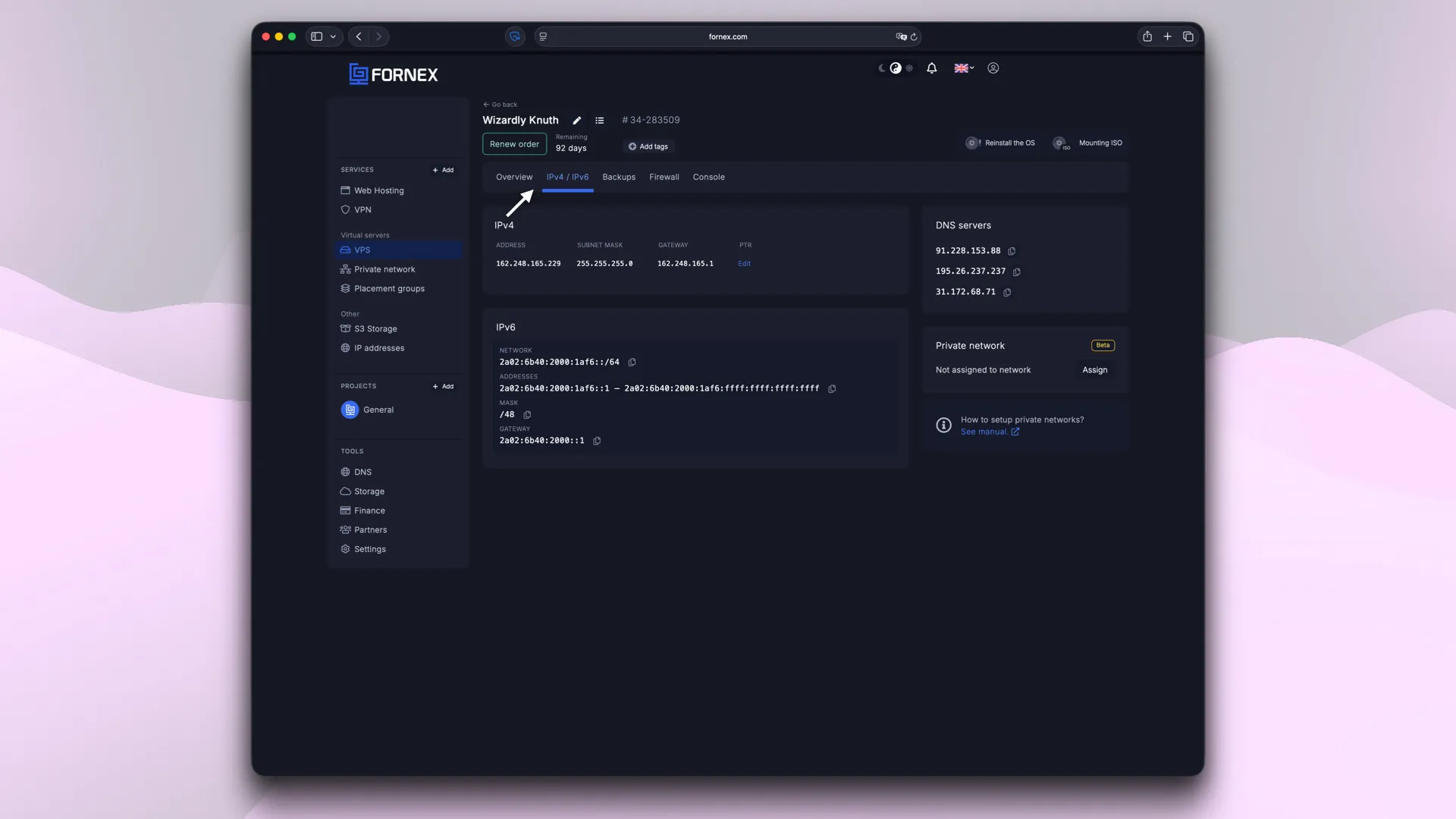 List of IPs, PTR records, and private network options
Backups
Automatic and manual disk snapshots.
Full details on backups here.
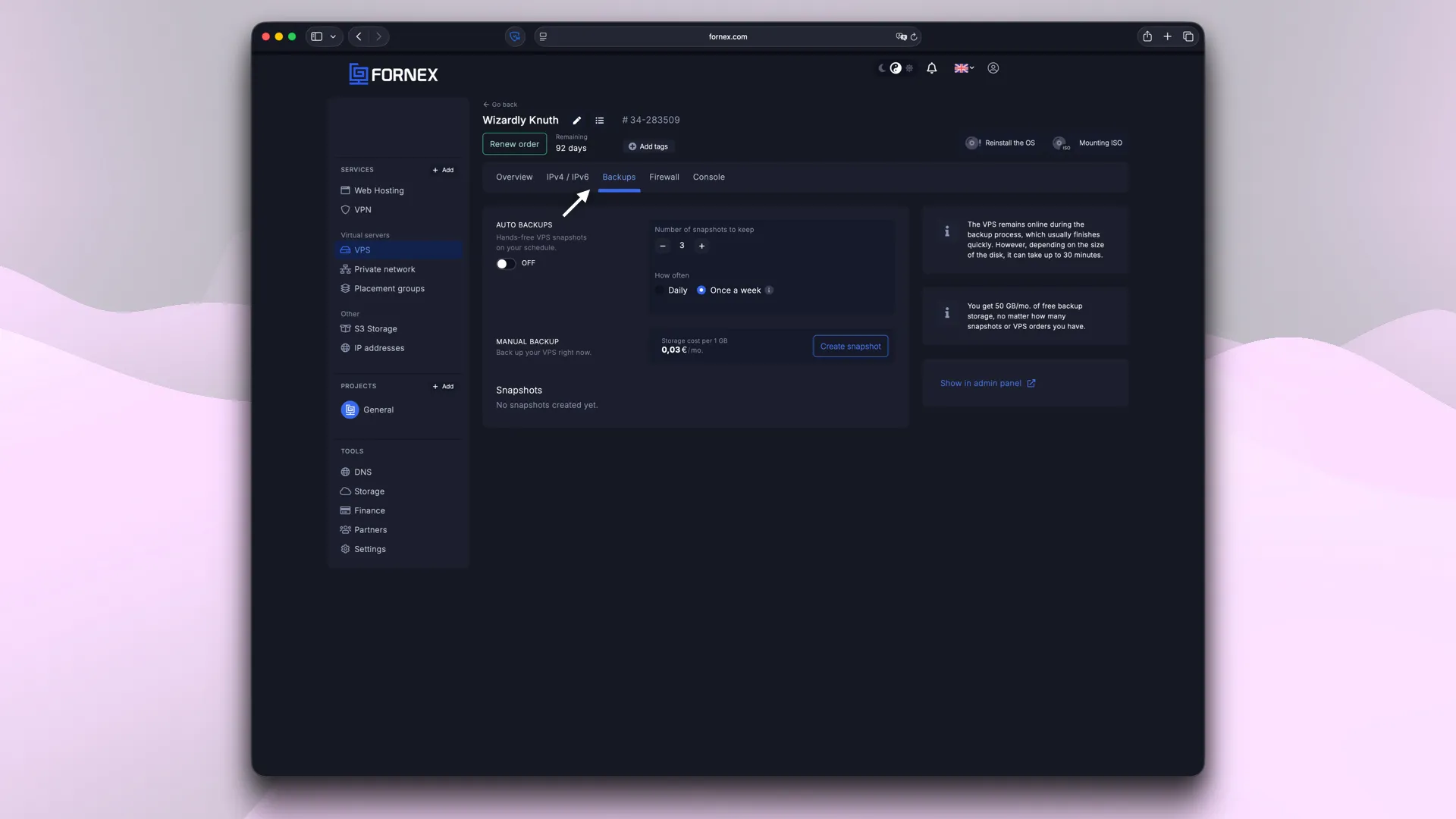 Backups section
Firewall
Firewall lets you manage incoming traffic filtering rules.
It’s a security tool that allows or blocks connections based on IP, ports, and protocols.
Note
Enabling the firewall without adding allow rules will block all incoming traffic. Add rules for required ports (SSH 22, HTTP 80/443, etc.) first.
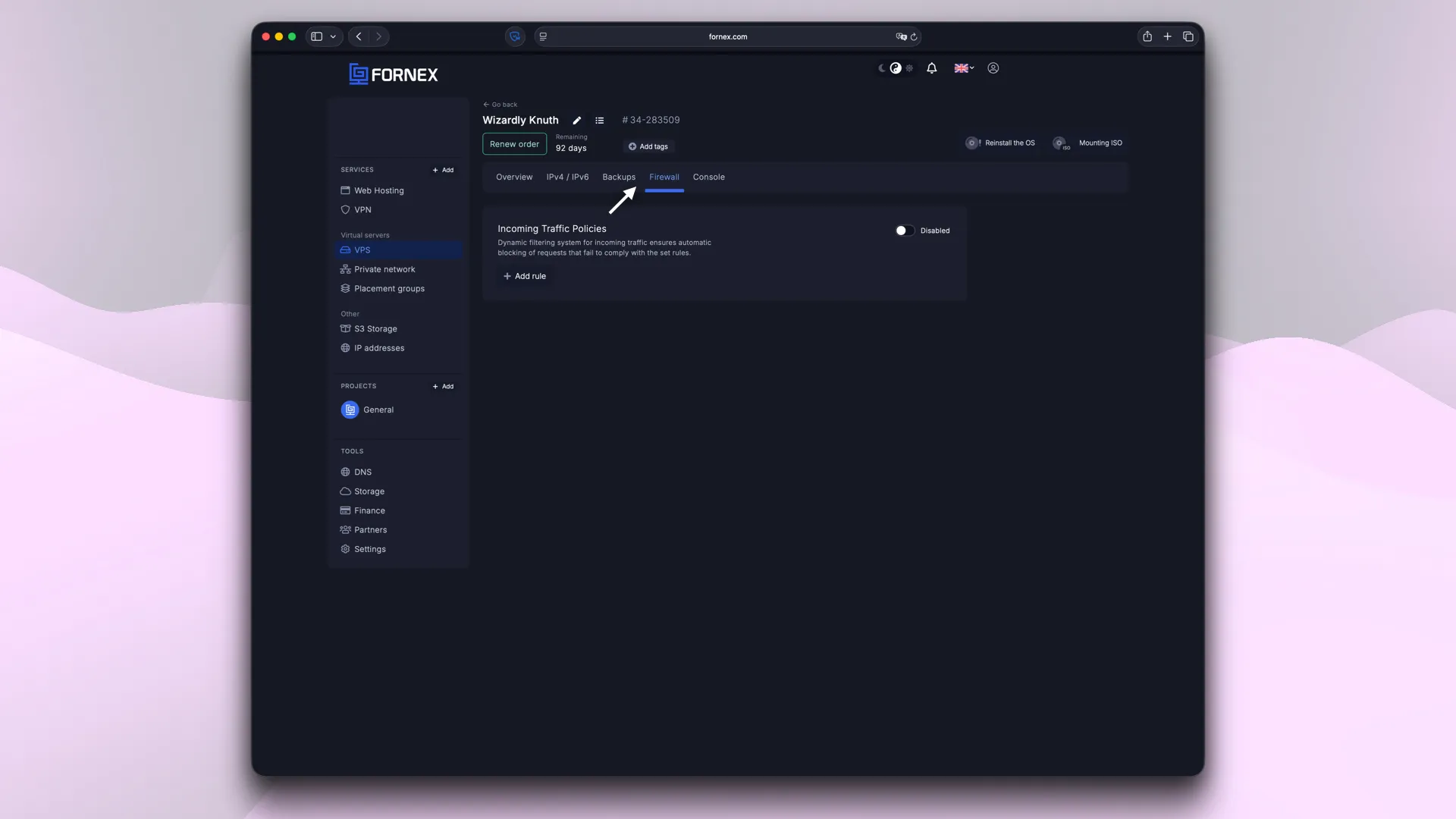 Managing the firewall
Console
Connect to your server via the built-in web console (VNC-like interface) — useful when SSH access is unavailable.
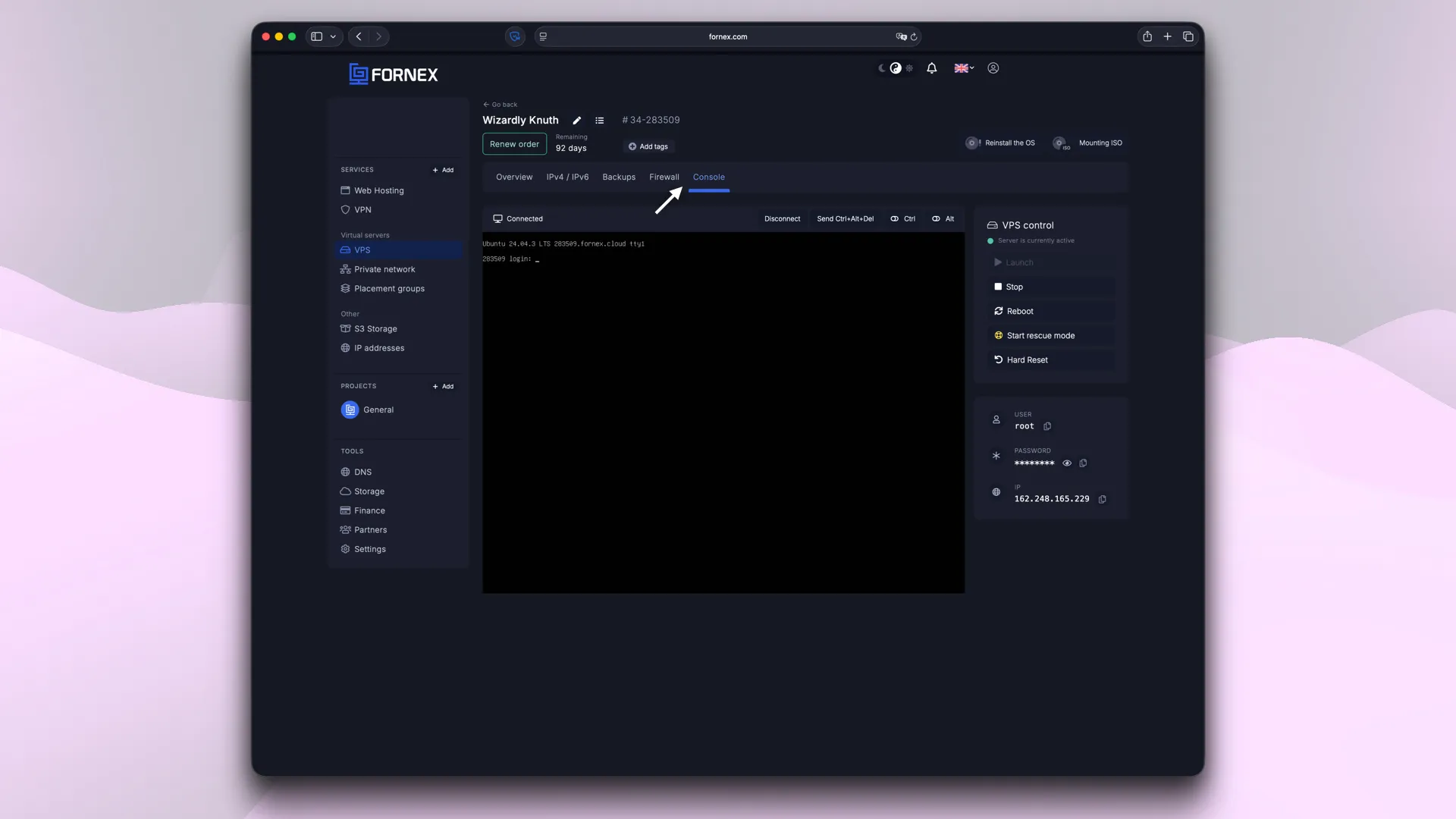 Built-in console
Help
If you have any questions or need assistance, please contact us through the ticket system — we're always here to help!