Private networks for VPS on Windows
Step-by-step guide to setting up a closed private network between VPS servers on Windows.
Private networks allow you to connect multiple VPS servers into a single closed network within the data center. All traffic between them passes through an internal channel without accessing the internet.
This provides enhanced security and significantly higher data exchange speeds compared to the public network.
Important
Private networks are available only for VPS located in the same location (one data center).
You need at least two active VPS to activate a private network.
Activate the private network
- Log in to your Fornex Dashboard.
- Go to the section Virtual servers → Private network.
- Create a new private network or select an existing one.
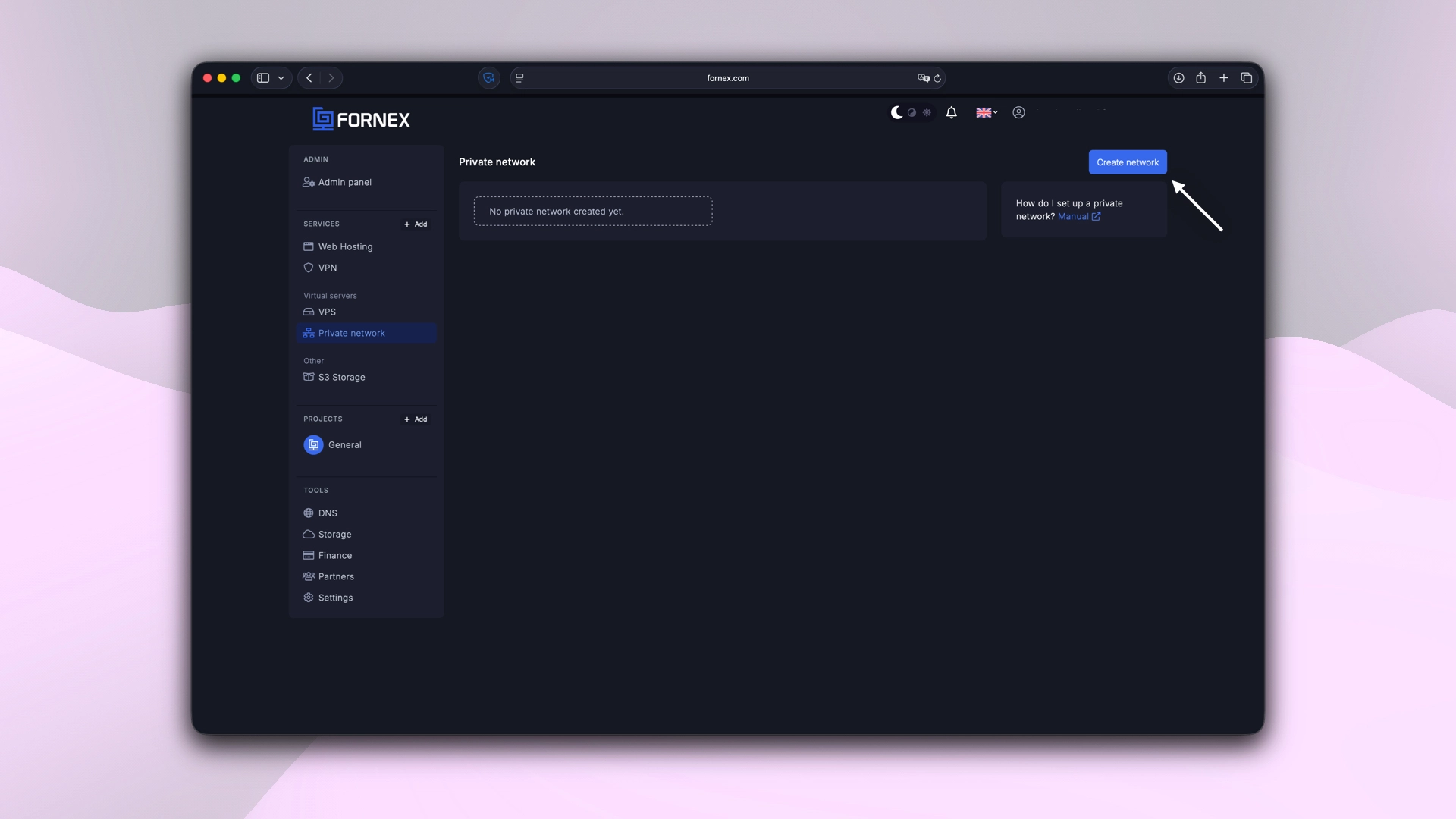 Setting up private network for VPS in Fornex
- Add the required VPS servers to the network (they must be in the same location).
 Setting up private network for VPS in Fornex
Don't have a VPS yet?
Fornex offers VPS hosting with full root access, 24/7 support, and DDoS protection. Get a stable server with NVMe disks for fast and reliable operation. Find more details on the Fornex VPS page.
Configure the network interface on VPS
To make the private network work, you need to manually configure the second network interface on each server. The address range is 192.168.1.0/24.
You can use any free IP from this range, except .1 and .255.
Example setup on Windows (using Server Manager)
- Open Server Manager → go to the Local Server tab.
- Locate the Ethernet parameter (or Ethernet 2, Ethernet Instance 0 2 — this is the second interface added for the private network).
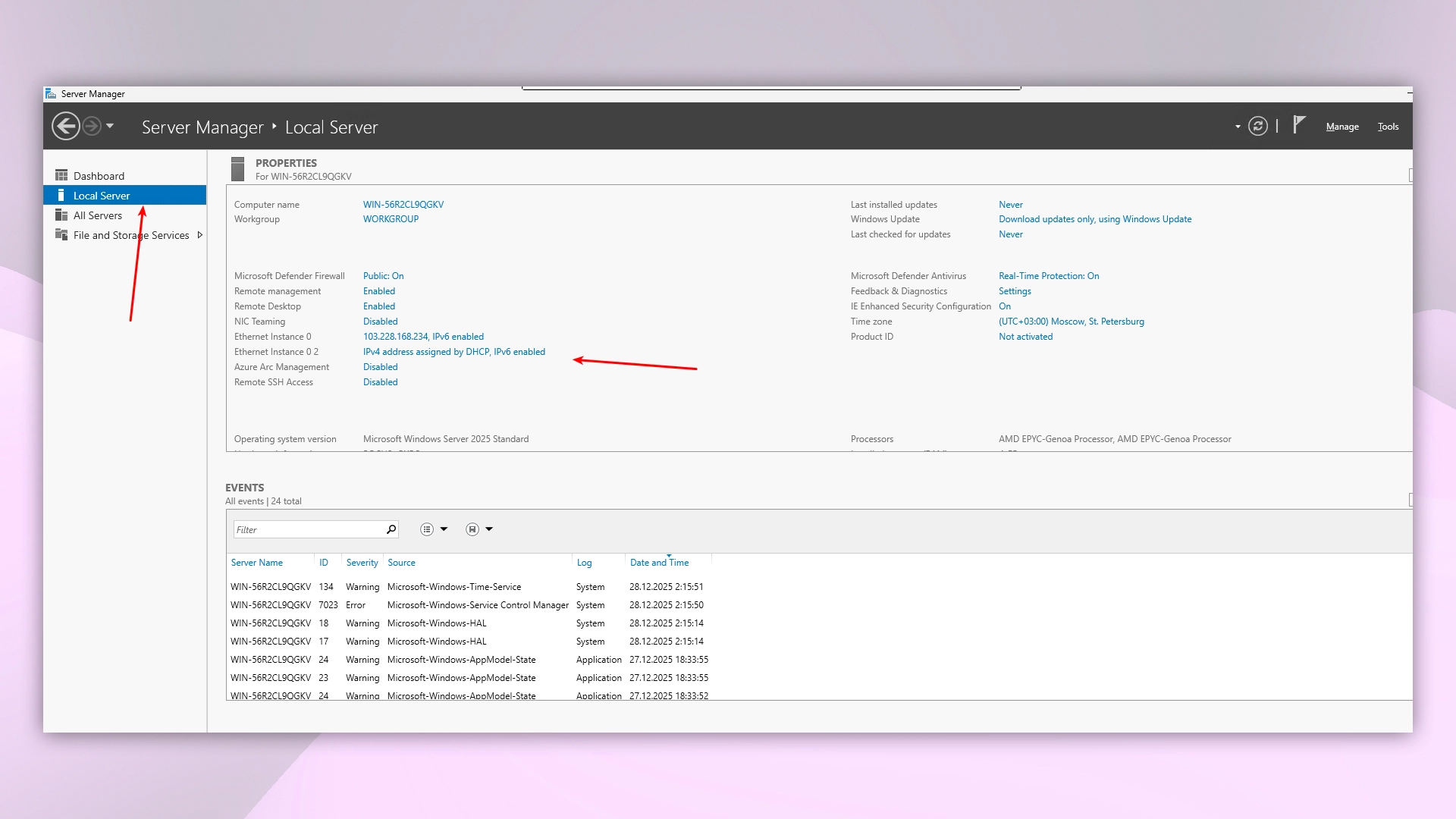 Local Server dashboard in Server Manager
- Right-click on the Ethernet Instance 0 2 connection → Properties.
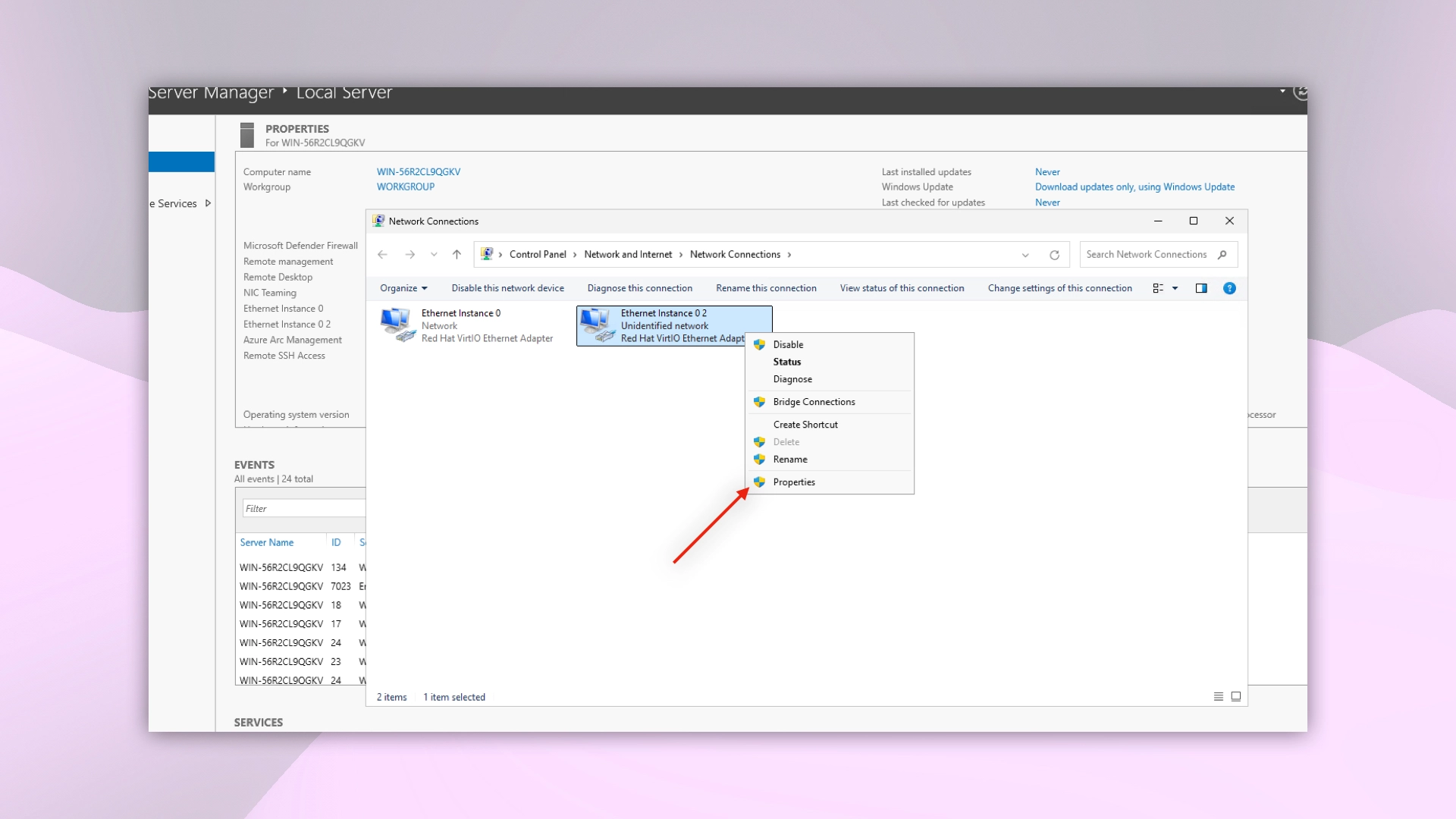 Selecting the connection in Network Connections
- Select Internet Protocol Version 4 (TCP/IPv4) → Properties.
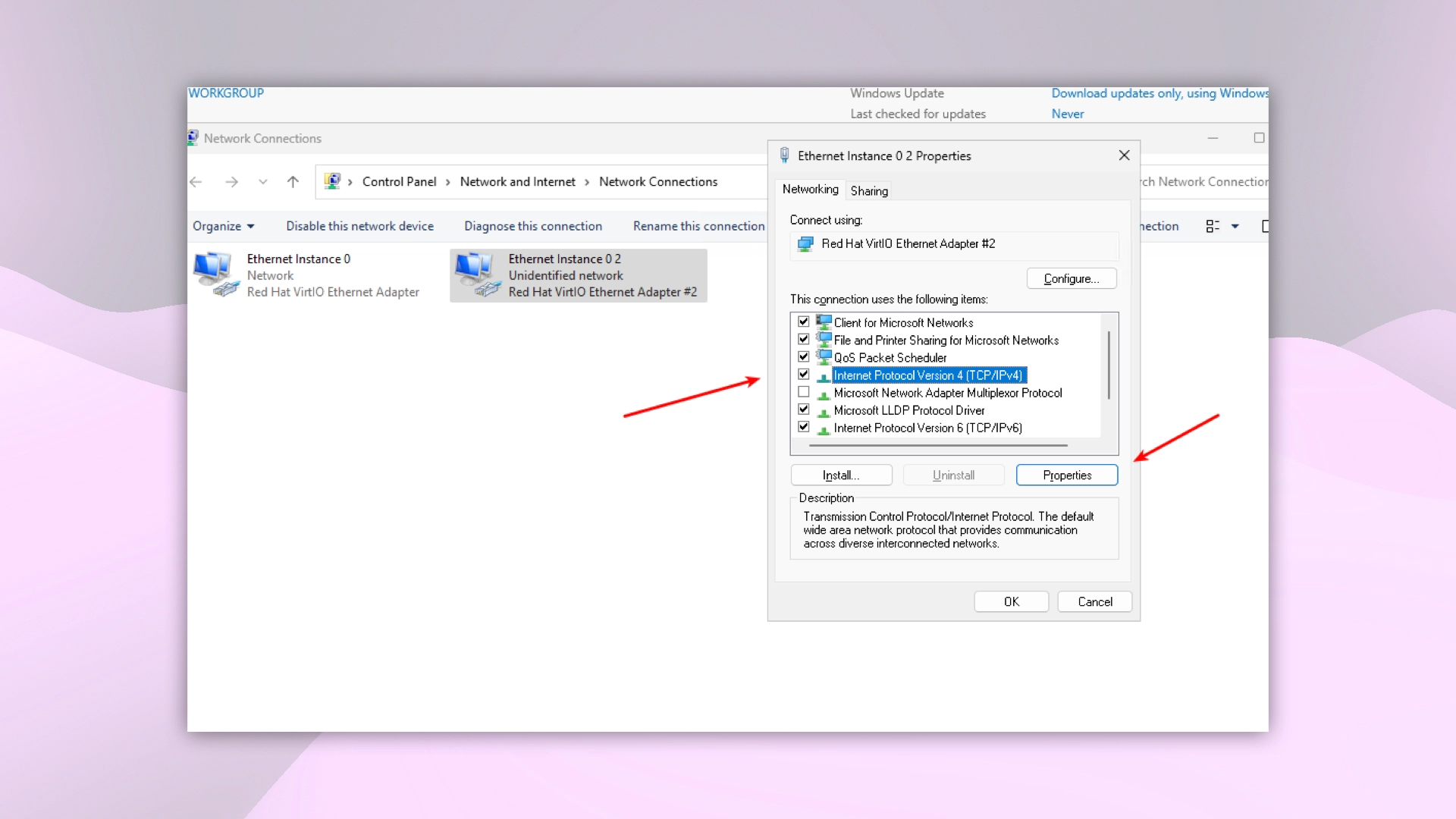 Ethernet Instance properties in Server Manager
- Select Use the following IP address and enter:
- IP address — a free address from the
192.168.1.0/24range, for example192.168.1.10.
(Use different addresses on different servers, but within the same subnet) - Subnet mask —
255.255.255.0. - Default gateway — your router's IP address, for example
192.168.1.1. - Preferred DNS server —
8.8.8.8(public Google DNS). - Alternate DNS server — can be left empty.
- IP address — a free address from the
 Configuring the connection parameters
- Check the information in the Local Server dashboard after applying the changes:
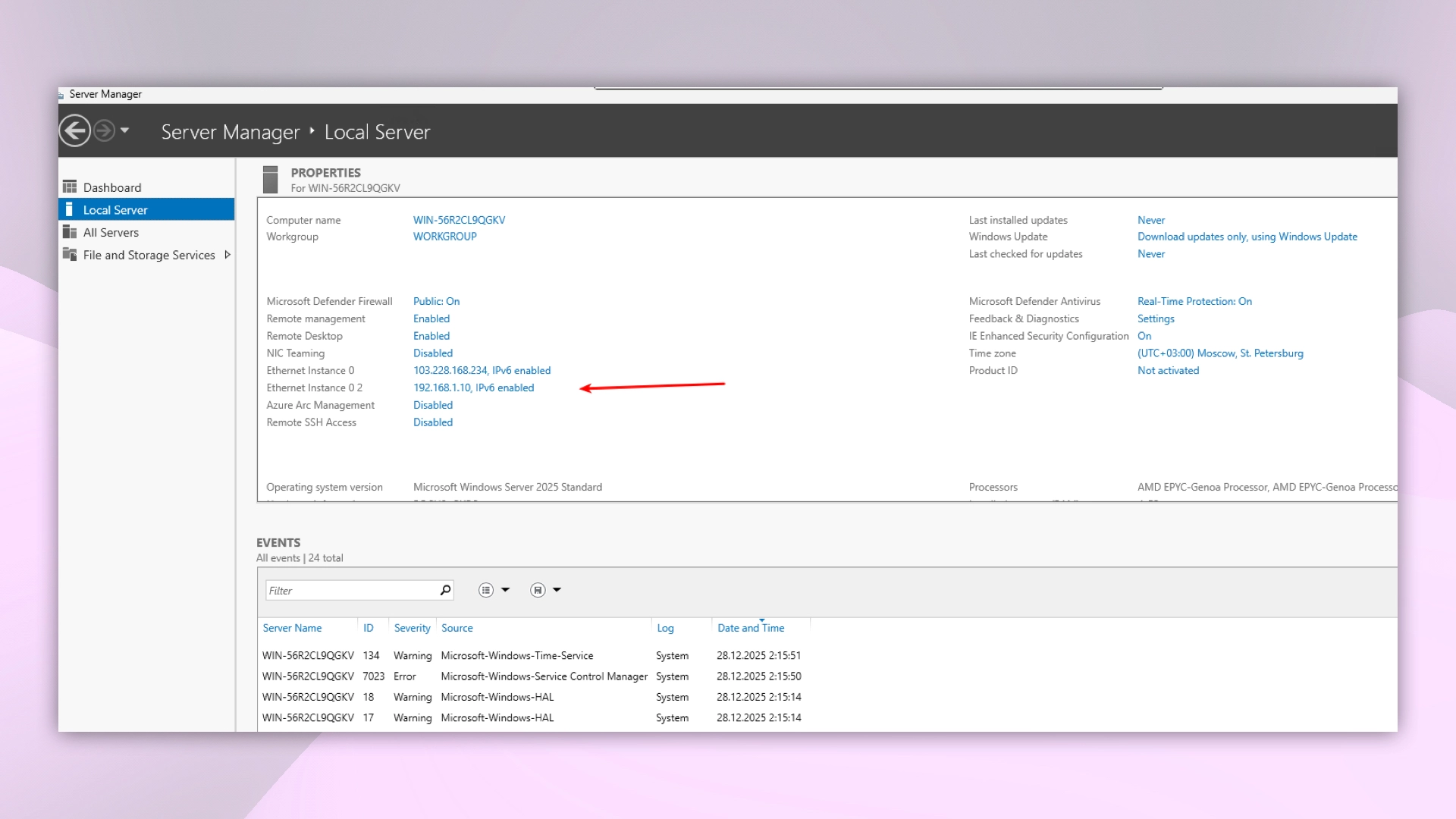 Local Server dashboard in Server Manager after network settings changes
Verifying the private network
From the current server, run a ping to the private IP of the second server:
ping 192.168.1.15
You should see successful responses with very low latency (usually < 1 ms):
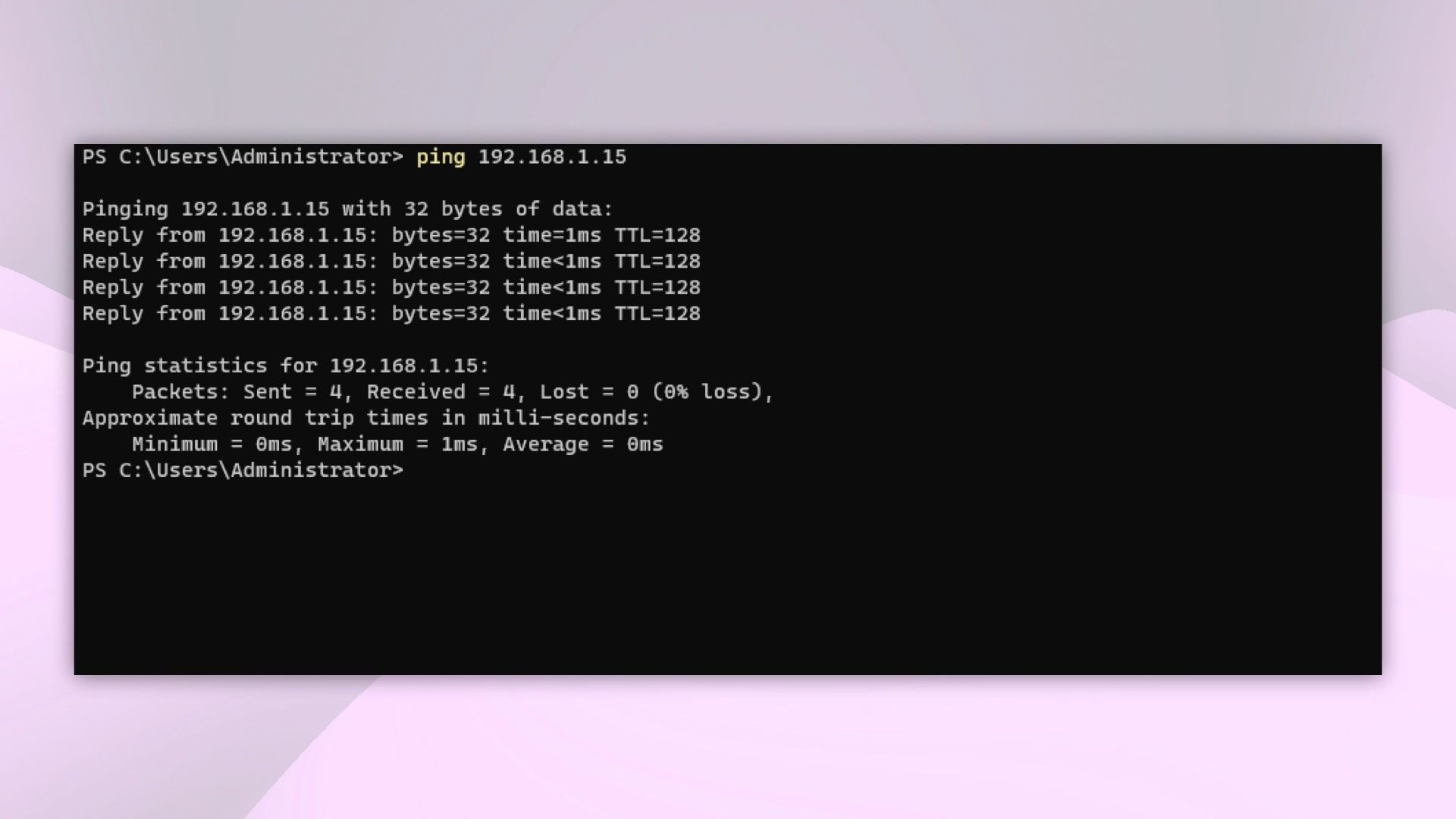 Verifying private network VPS connection
Your VPS servers can now securely and quickly exchange data within the private network.
Help
If you have any questions or need assistance, please contact us through the ticket system — we're always here to help!