Configuring php.ini in the Hestia CP
Guide to configuring the php.ini configuration file in the Hestia control panel.
Hestia CP is one of the most popular and user-friendly hosting control panels around. It covers everything from managing websites, email, and databases to SSL certificates, file management, and task scheduling — all from a clean, straightforward interface. Panel allows you to fine-tune php.ini directives directly through the web interface, eliminating the need for manual command-line edits.
How to access PHP configuration
- Log in to your Hestia CP dashboard.
- Navigate to the Server Settings (gear icon in the top menu).
- Locate your web server — apache2 .
- Hover over the service and click
Edit.
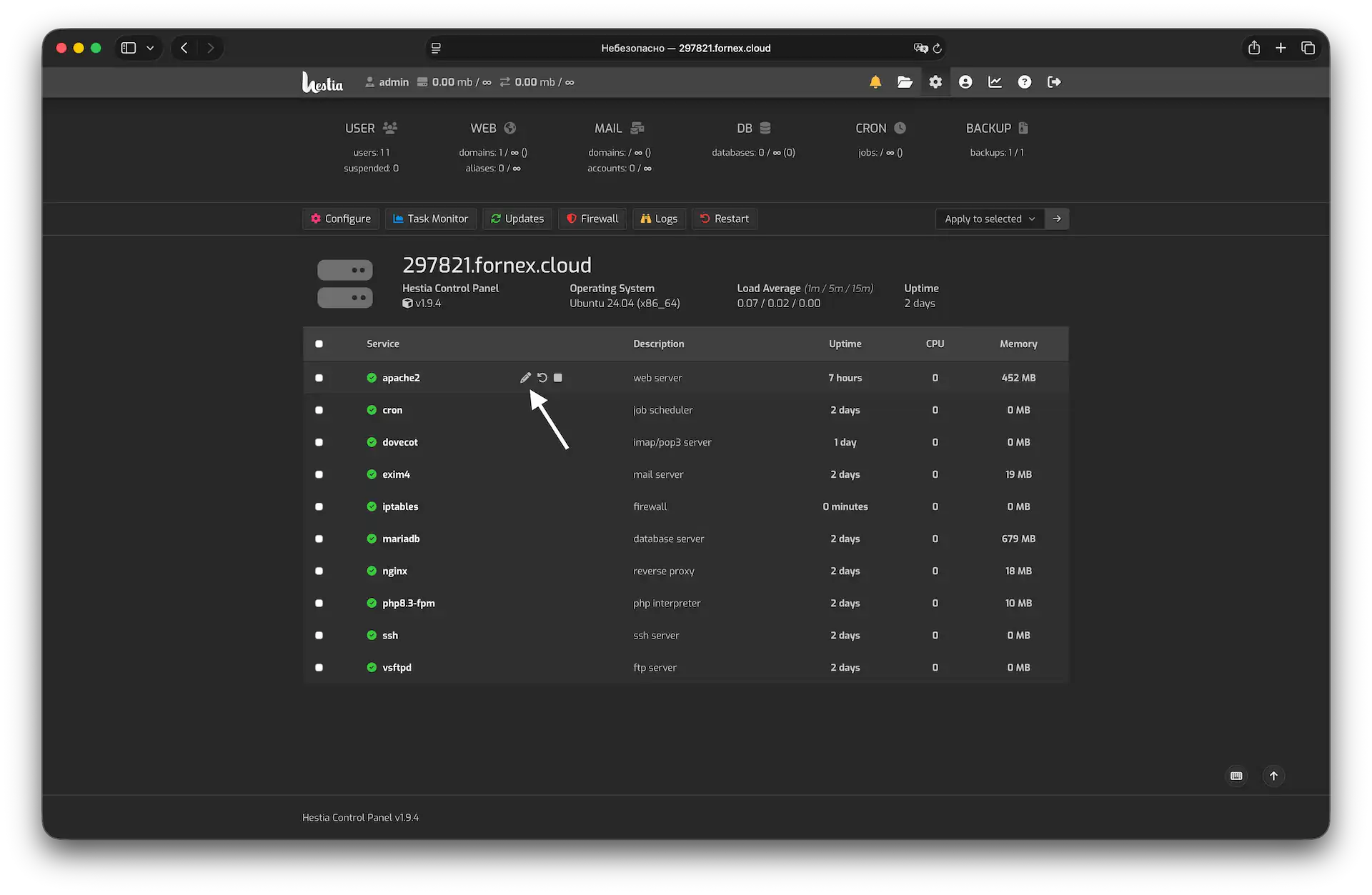 Navigating to PHP settings in Hestia CP
Essential PHP directives
Below are the most frequently adjusted parameters for optimizing your environment:
max_execution_time– Defines the maximum time (in seconds) a script is allowed to run.memory_limit– The maximum amount of RAM a single script can consume.post_max_size– The upper limit for data sent via POST requests (should be equal to or larger thanupload_max_filesize).upload_max_filesize– The maximum size allowed for file uploads.display_errors– Toggles whether errors are visible to the end-user. Keep this Off in production for security.error_reporting– Sets the verbosity level for PHP error logging.
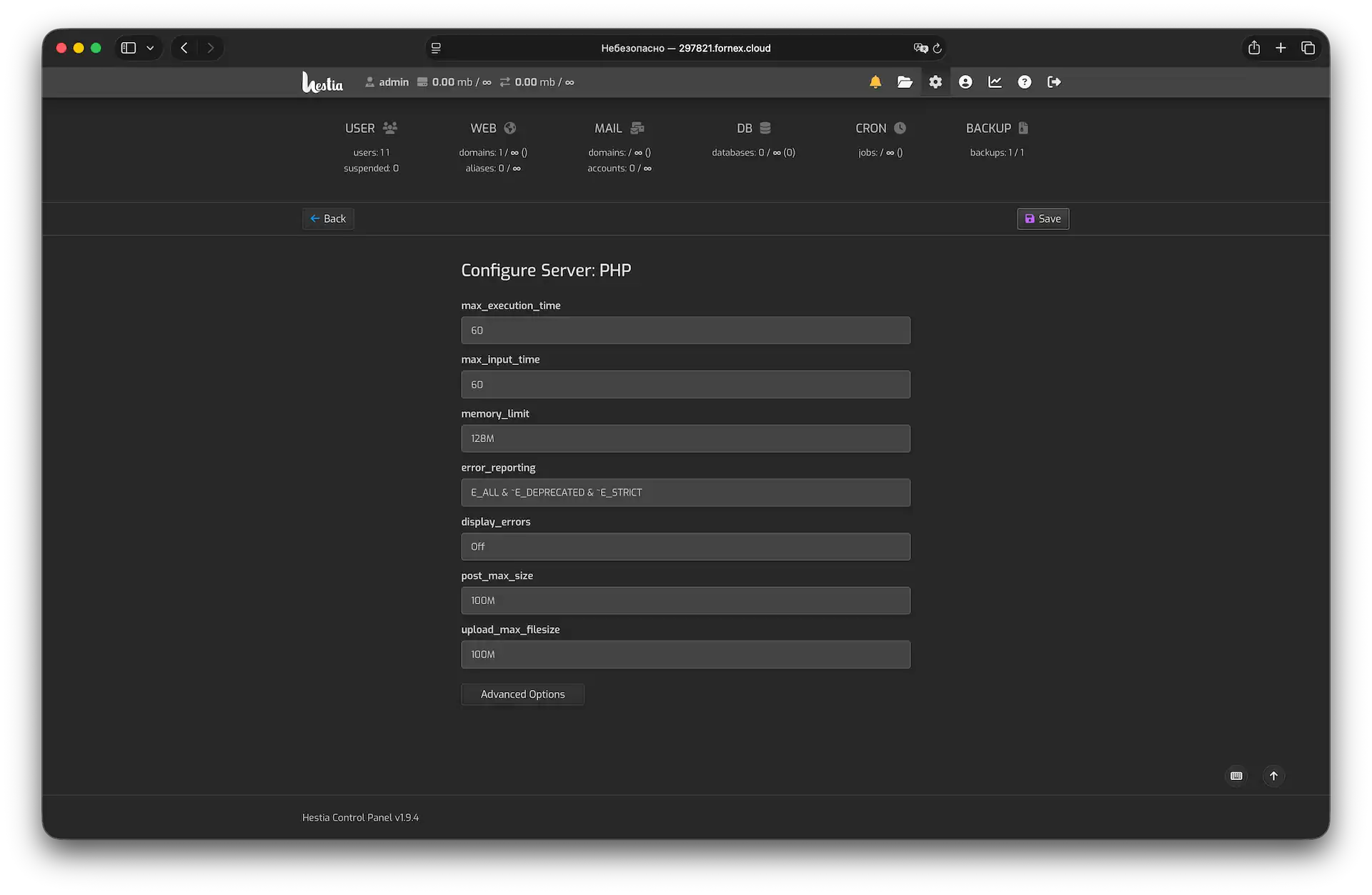 Common PHP configuration options
Need more granular control? Click Advanced Options to access the full configuration file.
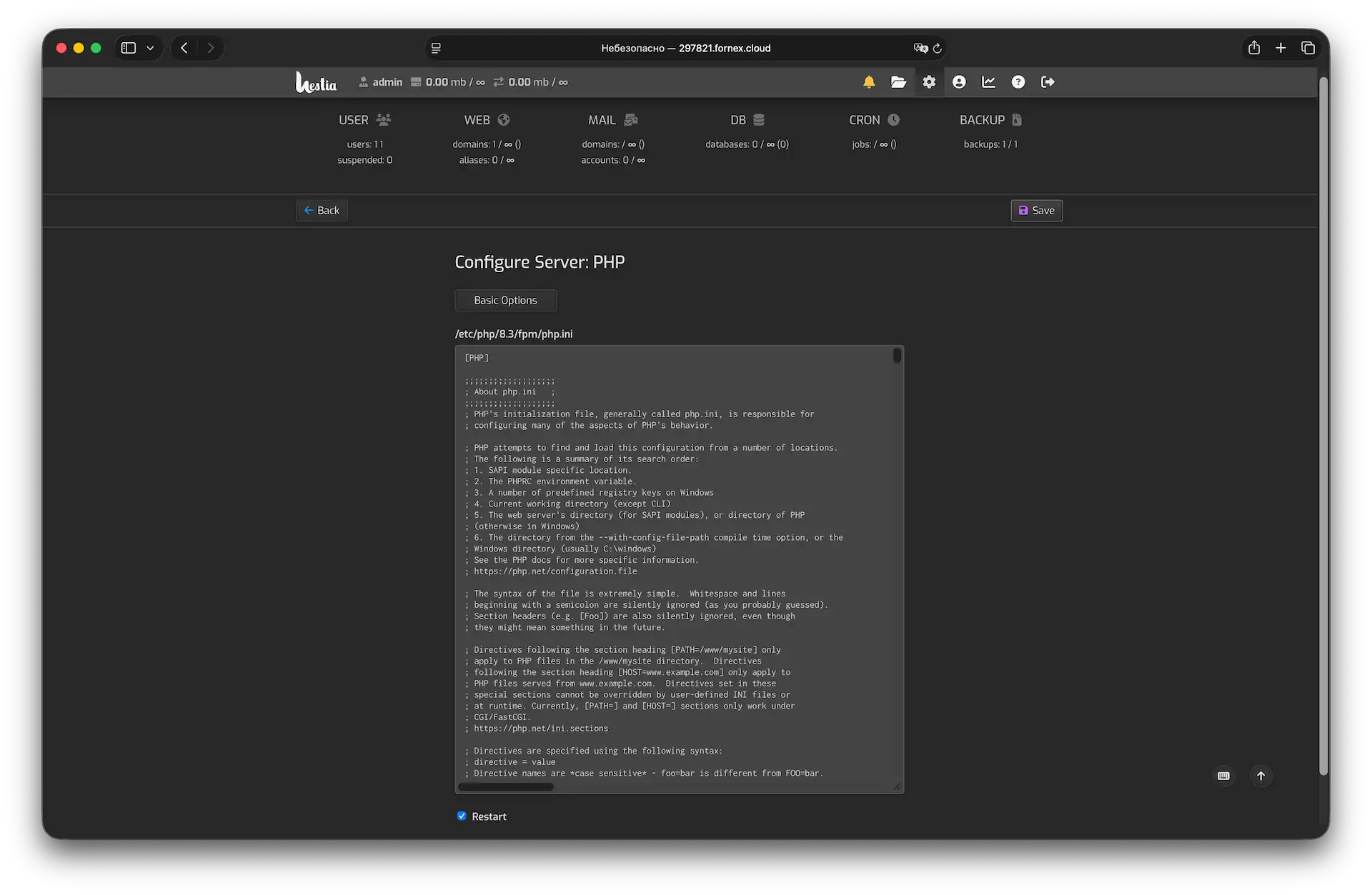 Accessing advanced PHP configuration
Applying your changes
To ensure your new settings take effect:
- Check the Restart box (this automatically reloads the PHP service).
- Click
Save.
Hestia will validate the configuration and restart the necessary services in the background. Your changes will be live instantly.
Best practices & tips
- Production Security: Never leave
display_errorsenabled on a live site, as it can leak sensitive path information to visitors. - Performance: If changes don't seem to apply, try clearing your OPcache or your browser's cache.
- Resource Management: Set realistic limits. Assigning excessive memory to
memory_limitcan lead to server instability if multiple processes run simultaneously.
Help
If you have any questions or need assistance, please contact us through the ticket system — we're always here to help!